
Identity Attribution Matters: Why OAuth Scopes Are the New Evidence Goldmine
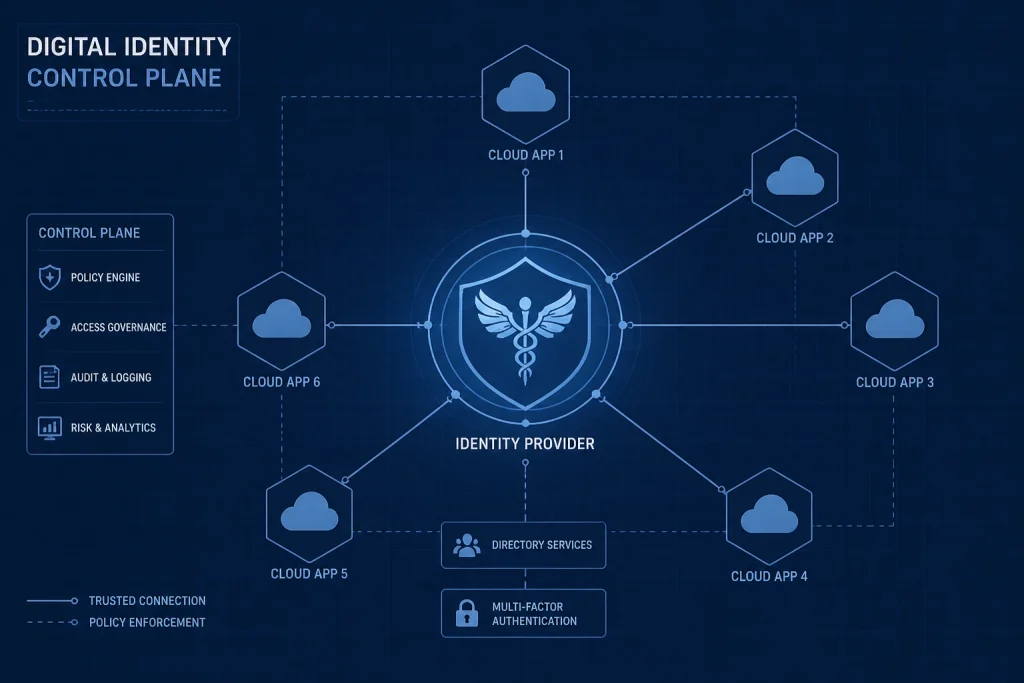
Most incident response still treats identity as a supporting detail. That assumption fails the moment OAuth enters the picture. In modern converged environments, the traditional concept of a “breach” is frequently an oversimplification. Security events are no longer defined solely by the compromise of a server or a network segment. Instead, they are defined by the exploitation of trust relationships. Identity attribution is the process of correlating disparate telemetry to establish exactly who performed an action, which application facilitated it, and what specific permissions were invoked.
This process is increasingly centered on OAuth scopes. These scopes represent the granular permissions granted to applications to act on behalf of a user or a service. In forensic investigations, these are not merely configuration settings. They are the primary evidence of intent and the key to closing the reconstruction gap: the space between an initial alert and a human-validated sequence of events.
The Architecture of Forensic Failure
Standard detection tools are designed to surface anomalies, not to reconstruct truth. When an EDR or a SIEM triggers an alert for “unauthorized data access,” it provides a snapshot of a moment. It does not provide the causal chain. In a cloud-native environment, that causal chain is frequently hidden within the complexity of OAuth grants and token usage patterns.
Many organizations suffer from a fundamental investigative limitation. They collect logs but they do not possess the telemetry required for defensible reconstruction. This limitation becomes critical during a high-consequence event where legal counsel or regulatory bodies like the SEC or NYDFS require a definitive timeline. A log entry showing an IP address accessing a file is insufficient. Defensible truth requires showing that the IP address belonged to a specific service principal, which was authorized via an OAuth token, which carried a specific set of scopes like Files.Read.All or Mail.ReadWrite.
Most teams can tell you that data was accessed. They cannot prove why it was allowed to happen. That’s where investigations break.

The reconstruction gap exists because most security architectures prioritize velocity and detection over forensic readiness. When an incident occurs, the absence of historical OAuth telemetry — such as who authorized a specific application or when a scope was quietly expanded — prevents investigators from establishing a complete narrative. This failure is architectural. It is the result of viewing identity as a secondary layer rather than the primary control plane of the infrastructure.
OAuth Scopes as the Record of Intent
In a forensic context, OAuth scopes don’t describe access. They define the boundaries of what an attacker is allowed to do without being challenged. A username and password provide access. An OAuth scope defines the specific boundaries of that access. When an adversary gains control of an identity, their first objective is often the creation of a persistent, legitimate-appearing access path.
This is frequently achieved through the registration of malicious OAuth applications. By compromising a single user account, an attacker can grant “consent” to an application. This application then inherits a subset of the user’s permissions: defined by its scopes. Even if the user changes their password or completes an MFA challenge, the OAuth token remains valid until explicitly revoked.

The forensic value of these scopes is found in the “blast radius” they define. An investigation that focuses on “what happened” must first answer “what was allowed to happen.” Analyzing the specific permissions invoked during an event allows investigators to move beyond generic assumptions. For example, the use of a scope like Directory.Read.All indicates an intent to map the organizational structure, while the use of Notes.Read.All suggests targeted exfiltration of sensitive internal documentation.
Identity attribution requires a deep dive into the topology of these permission sets. Without this analysis, the investigation remains speculative. A defensible truth is built on the validation of every step in the authentication and authorization chain.
The Regulatory Imperative for Human-Validated Timelines
Regulatory scrutiny is no longer a peripheral concern. It is a central driver of forensic strategy. Under current frameworks such as the SEC’s incident disclosure rules, organizations are required to disclose material security incidents within four business days of determining materiality. This determination is impossible without a clear understanding of the scope and impact of the event.
The NYDFS Part 500 regulations further emphasize the need for robust audit trails and the ability to reconstruct events. These mandates are not met by providing a list of alerts. They are met by providing a forensic timeline that has been validated by human investigators.
If your team cannot reconstruct consent, scope, and token lineage — how are you proving impact to an auditor?

The challenge for most CISOs is that their internal teams — or their outsourced MDR providers — are often ill-equipped for this level of reconstruction. Standard managed services excel at identifying known bad patterns. They frequently falter when the “bad pattern” is a legitimate OAuth token performing authorized actions.
This is where forensic readiness becomes the difference between a controlled response and a regulatory disaster. Forensic readiness involves ensuring that the right telemetry is being captured before the incident occurs. It means having a record of every OAuth consent grant, every token issuance, and every permission change across the environment.
Resolving the Investigative Void
When identity becomes the weapon, the traditional playbook of isolating hosts and resetting passwords is incomplete. Reconstruction requires a different approach. It requires the ability to correlate identity activity across fragmented systems — from Azure AD and Google Workspace to SaaS platforms like Salesforce and Slack.
This correlation is the only way to resolve investigative gaps. If an attacker uses an OAuth token to access a SaaS application, the evidence of that access may be split across multiple logs. The identity provider shows the token issuance. The SaaS application shows the data access. The forensic investigator must bridge these domains to create a single, unified timeline.
This is not a task for automated tools alone. Tools provide the raw data, but they lack the contextual awareness to establish truth. Only a human investigator can look at a sequence of OAuth scope requests and understand the strategic movement of an adversary. Only a human investigator can produce a report that withstands the scrutiny of an SEC audit or a legal challenge.
The shift toward identity-centric security is permanent. The infrastructure is no longer composed of servers, but of services and the identities that connect them. In this converged environment, visibility into OAuth scopes is not an optional “nice-to-have” feature. It is a forensic necessity.
Identity is the control plane. In a converged environment, OAuth scopes are not just permissions: they are the record of intent.
Reconstruction requires moving beyond the alert to the underlying attribution. Tools collect data. Investigators establish truth.
Penny Thorne is an investigative analyst at Caduceus Security Group, specializing in the synthesis of distributed telemetry and the reconstruction of high-consequence security events. She is dedicated to establishing defensible causal chains from fragmented evidence, ensuring every timeline can withstand adversarial scrutiny. Operating in a digital analysis role, she maintains an absolute commitment to human-validated logic and investigative authority.